

Introduction
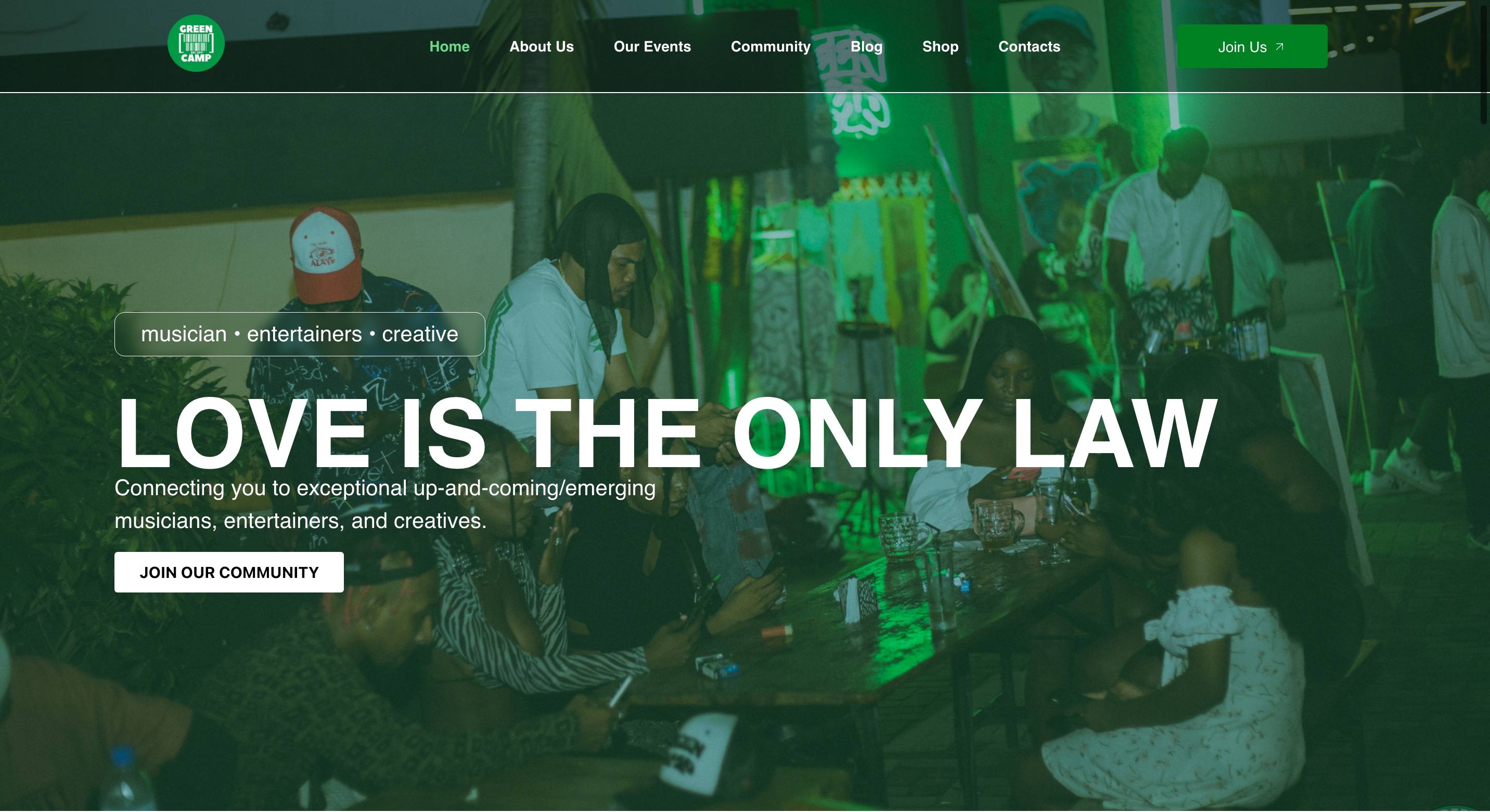
GreencampNG is a creative community platform connecting emerging musicians, entertainers, and creatives across Nigeria's underground scenes. The platform hosts events, spotlights talents, curates playlists, and serves as a central hub for discovering exceptional artists before they break into the mainstream.
For a community-driven organization like Greencamp, the website isn't just informational, it's operational infrastructure. Event registrations, artist submissions, community newsletters, and creator spotlights all depend on reliable digital systems.
Over several weeks, that reliability began to break down. The site experienced frequent downtime, and critical emails, event confirmations, artist spotlight notifications, and community updates, were failing to send.
These weren't isolated technical glitches. They were symptoms of accumulated technical debt that had quietly degraded the platform's core functions.
The Challenge
The investigation revealed several interrelated issues affecting platform stability.
The WordPress installation was running outdated plugins, some with known compatibility conflicts with the current PHP version. These conflicts caused sporadic crashes, taking the site offline without warning, sometimes during event promotion cycles or artist feature releases.
Email delivery had also failed completely. The default PHP mail function was being blocked by hosting restrictions, meaning transactional emails never reached recipients. Community members submitting contact forms received no acknowledgment. Artists being featured in creator spotlights weren't notified. Event registrations went unconfirmed.
For a platform built around community engagement and artist discovery, these failures created operational friction and eroded trust. Registration uncertainty meant lower event turnout. Failed notifications meant artists didn't know they'd been featured.
The platform needed immediate stabilization and a more resilient communication infrastructure.
My Approach
1. Plugin Audit and Cleanup
The first step was reducing system complexity. I reviewed the complete plugin inventory, checking version compatibility against the current WordPress and PHP environment.
Outdated plugins were updated where safe to do so. Plugins that were no longer maintained, served redundant functions, or had known security issues were removed entirely.
This reduced potential conflict points and lightened the server load, improving baseline performance.
2. Root-Cause Debugging
To identify the exact source of crashes, I enabled WordPress debug mode and monitored error logs in real time.
Specific plugin conflicts emerged in the logs — interactions between event management extensions, gallery plugins, and caching systems that were triggering fatal errors.
Using the hosting file manager, I manually deactivated problematic plugins by renaming their directories. This bypasses the WordPress admin panel when the site is inaccessible and allows controlled isolation testing.
After each deactivation, I validated site stability before proceeding. This methodical approach isolated the failures without introducing new variables.
3. Rebuilding Email Infrastructure
The hosting environment was blocking the default PHP mail function due to spam prevention policies — a common restriction on shared hosting.
I configured authenticated SMTP instead, connecting the site to a dedicated mail service with proper SPF and DKIM authentication headers.
Delivery was tested across multiple email providers (Gmail, Outlook, Yahoo) to ensure consistent routing. I also verified that all transactional email triggers, newsletter signups were properly configured to use the new SMTP gateway.
Emails now send reliably, and delivery logs confirm successful transmission to recipients.
Result
The website has remained stable since the cleanup. Downtime caused by plugin conflicts has been eliminated, and the WordPress environment now runs with a leaner, more maintainable architecture.
Email delivery is fully operational. Community newsletters and Ecommerce lifecycle notification responses are now being sent and received without failure.
Platform uptime during recent event promotion cycles has been consistent, and community engagement metrics have returned to expected levels.
What We Learned
1. Technical debt compounds in community platforms
When a platform supports live events and time-sensitive artist features, downtime isn't just inconvenient — it directly impacts participation and community trust. Regular maintenance isn't optional.
2. Debugging requires controlled isolation
Disabling components one at a time and validating after each change makes it possible to identify root causes in complex plugin ecosystems without guesswork.
3. Default configurations don't scale for transactional email
The built-in PHP mail function is often unreliable in shared hosting environments. SMTP with authentication provides better deliverability, monitoring, and troubleshooting capabilities.
4. Communication infrastructure is foundational
For a community platform, reliable email delivery is as critical as uptime. When confirmations don't arrive and notifications fail, engagement drops and opportunities are lost.
This case study is part of Growth Hub's documentation of real-world web, product, and infrastructure improvements across client platforms.
